

Tanker Truck
What Is Tanker Truck
A tanker truck is a motor vehicle designed to carry liquids or gases on roads. The largest such vehicles are similar to railroad tank cars, which are also designed to carry liquid loads. Many variants exist due to the wide variety of liquids that can be transported. Tank trucks tend to be large; they may be insulated or non-insulated; pressurized or non-pressurized; and designed for single or multiple loads (often by means of internal divisions in their tank).
Advantages of Tanker Truck
Efficiency
Tanker trucks are an efficient mode of transportation, enabling the rapid movement of large volumes of liquid cargo.
Versatility
They can transport a wide range of liquids, from hazardous chemicals to food-grade products; this is possible because of various tanker types.
Safety
Tanker trucks are designed with safety in mind, with features like reinforced tank walls and secure closures to prevent leaks and spills.
Capacity and efficiency
Our tanker truck is available in various capacities to meet different customer requirements. We optimize the design to maximize payload while maintaining the highest levels of safety and efficiency.
Temperature Control
Some tanker trucks, like insulated tankers, allow precise temperature control, ensuring that temperature-sensitive cargo remains intact.
Easy operation and maintenance
We have designed the tanker truck for user-friendly operation and simplified maintenance.
-
![Co2 Tanker Truck Semi Trailer Transport For Sale]() Co2 Tanker Truck Semi Trailer Transport For SaleThe low temperature co2 gas truck tank is mainly composed of a horizontal storage tank, a semi-trailer chassis, an operating box, a cryogenic liquid pump, an automatic compressor, a flow hose and...read more
Co2 Tanker Truck Semi Trailer Transport For SaleThe low temperature co2 gas truck tank is mainly composed of a horizontal storage tank, a semi-trailer chassis, an operating box, a cryogenic liquid pump, an automatic compressor, a flow hose and...read more -
![Efficient LPG Transport Semi-trailer – Long/Short Haul Compatible]() Efficient LPG Transport Semi-trailer – Long/Short Haul Co...Designed specifically for liquefied petroleum gas (LPG) road transport, this high-security semi-trailer complies with international DOT/ASME standards and regional regulations, making it suitable...read more
Efficient LPG Transport Semi-trailer – Long/Short Haul Co...Designed specifically for liquefied petroleum gas (LPG) road transport, this high-security semi-trailer complies with international DOT/ASME standards and regional regulations, making it suitable...read more -
![Commercial LPG Dispenser For Gas Stations & Industrial Use]() Commercial LPG Dispenser For Gas Stations & Industrial UseLPG Dispenser is a high-performance, reliable fueling system designed for commercial, industrial, and automotive LPG (Liquefied Petroleum Gas) refueling applications. Making it ideal for gas...read more
Commercial LPG Dispenser For Gas Stations & Industrial UseLPG Dispenser is a high-performance, reliable fueling system designed for commercial, industrial, and automotive LPG (Liquefied Petroleum Gas) refueling applications. Making it ideal for gas...read more -
![50m3 Stainless Steel Underground Lpg Gas Tank Propane Tanks Price]() 50m3 Stainless Steel Underground Lpg Gas Tank Propane Tan...LPG storage tanks are designed for large-scale liquefied petroleum gas (LPG) storage and are suitable for chemical plants, energy stations, food processing, commercial gas supply, etc. The product...read more
50m3 Stainless Steel Underground Lpg Gas Tank Propane Tan...LPG storage tanks are designed for large-scale liquefied petroleum gas (LPG) storage and are suitable for chemical plants, energy stations, food processing, commercial gas supply, etc. The product...read more -
![Large Chemical High Vacuum Pressure Vessel Cryogenic Liquid Carbon Dioxide Semi-trailer]() Large Chemical High Vacuum Pressure Vessel Cryogenic Liqu...Cryogenic liquid carbon dioxide semi-trailers are indispensable "cryogenic transportation experts" in modern industry. With their sophisticated design and reliable performance, they protect the...read more
Large Chemical High Vacuum Pressure Vessel Cryogenic Liqu...Cryogenic liquid carbon dioxide semi-trailers are indispensable "cryogenic transportation experts" in modern industry. With their sophisticated design and reliable performance, they protect the...read more -
![High Safety Level Low Temperature Cryogenic Liquid Argon Semi-trailer Tank]() High Safety Level Low Temperature Cryogenic Liquid Argon ...Factory Customized Tri-axle 26000 Liters Liquid Argon Transport Tanker Semi Trailers For Sale Product introduction We company is engaging in manufacturing 40ft flatbed semi trailer, 3 axle 4 axle...read more
High Safety Level Low Temperature Cryogenic Liquid Argon ...Factory Customized Tri-axle 26000 Liters Liquid Argon Transport Tanker Semi Trailers For Sale Product introduction We company is engaging in manufacturing 40ft flatbed semi trailer, 3 axle 4 axle...read more -
![Chemical Industrial Cryogenic Liquid Nitrogen Semi-trailer Tank]() Chemical Industrial Cryogenic Liquid Nitrogen Semi-traile...Factory Customized Tri-axle 26000 Liters Liquid Argon Transport Tanker Semi Trailers For Sale Product introduction We company is engaging in manufacturing 40ft flatbed semi trailer, 3 axle 4 axle...read more
Chemical Industrial Cryogenic Liquid Nitrogen Semi-traile...Factory Customized Tri-axle 26000 Liters Liquid Argon Transport Tanker Semi Trailers For Sale Product introduction We company is engaging in manufacturing 40ft flatbed semi trailer, 3 axle 4 axle...read more -
![Best Quality Low Price Cryogenic Liquid Oxygen Tank Semi-trailer For Industrial Use]() Best Quality Low Price Cryogenic Liquid Oxygen Tank Semi-...Factory Customized Tri-axle 26000 Liters Liquid Argon Transport Tanker Semi Trailers For Sale Product introduction We company is engaging in manufacturing 40ft flatbed semi trailer, 3 axle 4 axle...read more
Best Quality Low Price Cryogenic Liquid Oxygen Tank Semi-...Factory Customized Tri-axle 26000 Liters Liquid Argon Transport Tanker Semi Trailers For Sale Product introduction We company is engaging in manufacturing 40ft flatbed semi trailer, 3 axle 4 axle...read more -
![Cryogenic Lng Tank Semi-trailer For Industrial Use]() Cryogenic Lng Tank Semi-trailer For Industrial UseFactory Customized Tri-axle 26000 Liters Liquid Argon Transport Tanker Semi Trailers For Sale Product introduction We company is engaging in manufacturing 40ft flatbed semi trailer, 3 axle 4 axle...read more
Cryogenic Lng Tank Semi-trailer For Industrial UseFactory Customized Tri-axle 26000 Liters Liquid Argon Transport Tanker Semi Trailers For Sale Product introduction We company is engaging in manufacturing 40ft flatbed semi trailer, 3 axle 4 axle...read more -
![Double Layer Insulation Cryogenic Liquid Argon Semi-trailer Tank]() Double Layer Insulation Cryogenic Liquid Argon Semi-trail...Factory Customized Tri-axle 26000 Liters Liquid Argon Transport Tanker Semi Trailers For Sale Product introduction We company is engaging in manufacturing 40ft flatbed semi trailer, 3 axle 4 axle...read more
Double Layer Insulation Cryogenic Liquid Argon Semi-trail...Factory Customized Tri-axle 26000 Liters Liquid Argon Transport Tanker Semi Trailers For Sale Product introduction We company is engaging in manufacturing 40ft flatbed semi trailer, 3 axle 4 axle...read more -
![High Quality Low Temperature Cryogenic Liquid Semi-trailer Tank]() High Quality Low Temperature Cryogenic Liquid Semi-traile...Factory Customized Tri-axle 26000 Liters Liquid Argon Transport Tanker Semi Trailers For Sale Product introduction We company is engaging in manufacturing 40ft flatbed semi trailer, 3 axle 4 axle...read more
High Quality Low Temperature Cryogenic Liquid Semi-traile...Factory Customized Tri-axle 26000 Liters Liquid Argon Transport Tanker Semi Trailers For Sale Product introduction We company is engaging in manufacturing 40ft flatbed semi trailer, 3 axle 4 axle...read more -
![CNCD Customized Sale Cryogenic Liquid Nitrogen Semi-trailer Tank]() CNCD Customized Sale Cryogenic Liquid Nitrogen Semi-trail...Factory Customized Tri-axle 26000 Liters Liquid Argon Transport Tanker Semi Trailers For Sale Product introduction We company is engaging in manufacturing 40ft flatbed semi trailer, 3 axle 4 axle...read more
CNCD Customized Sale Cryogenic Liquid Nitrogen Semi-trail...Factory Customized Tri-axle 26000 Liters Liquid Argon Transport Tanker Semi Trailers For Sale Product introduction We company is engaging in manufacturing 40ft flatbed semi trailer, 3 axle 4 axle...read more


Why Choose Us
Profession team
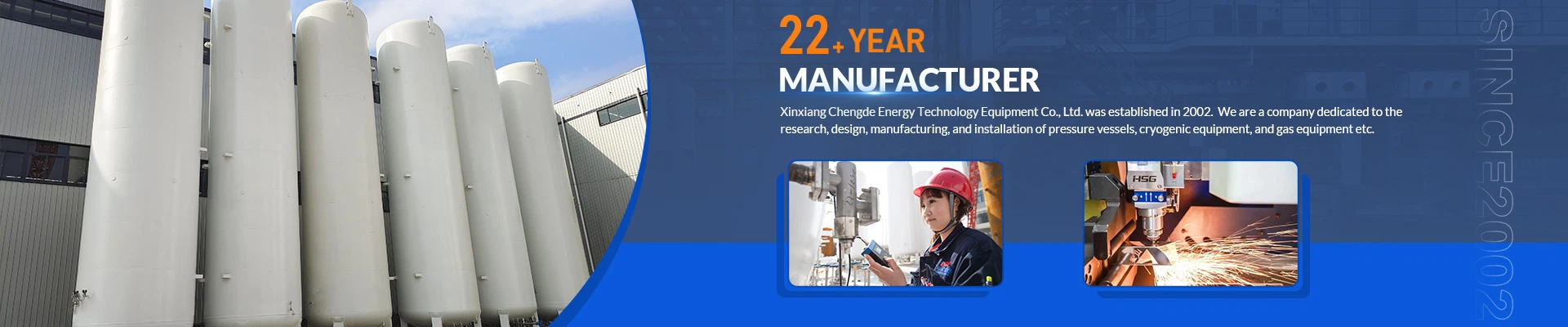
We are a company dedicated to the research, design, manufacturing, and installation of pressure vessels, cryogenic equipment, and gas equipment etc.
Quality assurance
We adhere to stringent quality control processes to deliver reliable and high-performance products that exceed industry standards.
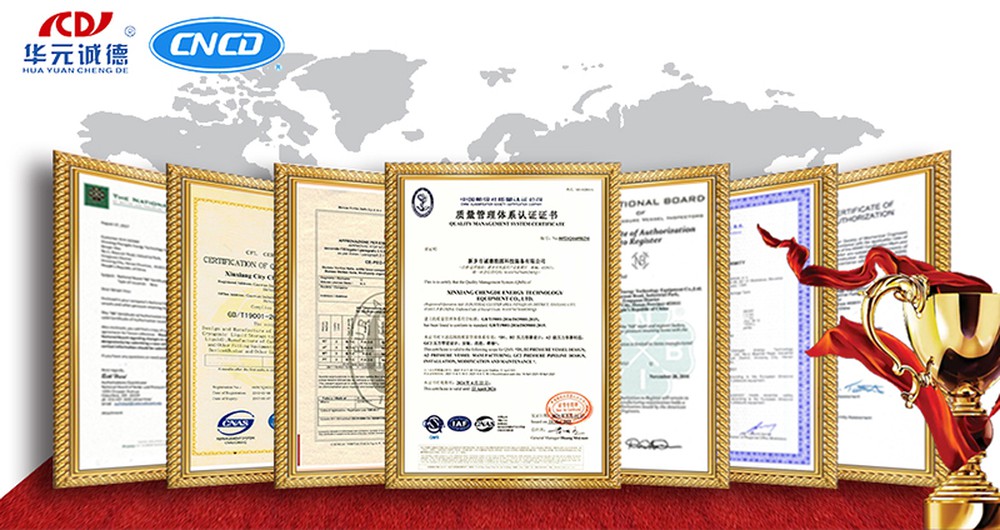
Our certificate
We have been awarded the National Low-Temperature Testing Center Product Type Certification.
Our company holds the D-level (including vacuum insulation vessels) pressure vessel manufacturing (including installation, repair).
After-sales service
Dedicated to strict quality control and thoughtful customer service, our experienced staff members are always available to discuss your requirements and ensure full customer satisfaction.
Types of Tanker Trucks
Tanker trucks are used to move hazardous and nonhazardous liquids, chemicals, gases, and dry bulk loads (like aggregates). There are three main tanker truck sizes: light, medium, and heavy duty, with most varieties falling into Class 8, which means that they have a gross vehicle weight rating of more than 33,000 pounds.Tanker trucks can come insulated, vacuum-sealed, or pressurized; which one you choose depends on the characteristics of your waste.There are three main types of tanker trucks: light duty, medium duty, and heavy duty.
While the information in the following three sections is true for many carriers, it can vary. Light duty tankers have a volume of up to 1,000 gallons and a gross weight carrying capacity less than 12,000 pounds. Gas, fuel, and water transportation is often carried out in medium duty tankers. How many gallons are in this tanker truck?
Medium duty tankers can hold between 500 gallons and 4,000 gallons, with a gross weight capacity less than 26,000 pounds. Heavy duty tankers are the final type of tanker truck we’ ll discuss. Their volume capacity typically ranges from about 5,500 gallons to 9,000, and they can transport more than 26,000 pounds of waste. To accommodate this load capacity, heavy duty tanker trucks are up to 53 feet for single trailers and up to 100 feet for multi-trailer configurations.
Finished Product Storage and Handling for Tank Trucks


Most bulk shipments of liquid oils are made by tank trucks; others are made by rail cars. The capacity of a tank truck can vary worldwide. The tank truck, upon arrival must be checked inside and outside to confirm that it is clean. A tank truck must have a cleaning certificate that clearly describes the following. The description of the previous load and it must be an oil that is compatible with the current oil to be loaded method of cleaning and the date and location of cleaning. The tank truck must not have any foreign or objectionable odor. A tank truck must always be filled to its capacity with a little space at the top. The oil inside the truck suffers a great deal of movement as the truck starts or stops.
The oxygen from the air in the tank truck headspace gets absorbed in the oil. This may not be detectable upon its arrival at the destination but may show as higher PV in the oil after storage. This is why a partial load in a truck should be avoided. Some have two or three compartments so more than one type of oil can be transported at a time or less than a full truckload of oil can be transported. However, they are hard to find. Some are insulated to protect the higher melting stocks from solidifying in the transit. Some have heated jackets to maintain higher temperature during extreme cold weather. This is not always safe because the temperature control is not always good. Some have two heating coils inside that can be used to melt the solidified product upon arrival by using low-pressure steam and thermodynamic traps.
The following steps are recommended for physically loading the truck with deodorized oil after the loading truck has been found satisfactory. Get a fresh (representative) sample from the deodorized oil storage tank and analyze it for finished product standards. The truck is ready to be loaded if the analysis of the oil is satisfactory. The truck must be bottom loaded which is the preferred way. It can be loaded from the top with the loading boom extended to the floor of the truck to minimize entrainment of air into the oil. The oil from the deodorized oil storage tank passes through an in-line nitrogen diffuser, which has a sintered metal diffuser along the axis. This saturates the oil with micro size nitrogen bubbles as the oil passes through the diffuser.
The oil rises from the bottom and some of the residual dissolved air is expelled which collects at the top and gets purged out of the tank truck. The tank truck is filled to the maximum liquid level as indicated on the truck. A representative sample is taken from the tank truck as an official loading sample and analyzed. Nitrogen gas is purged for an additional time (5–10 min), which purges more of the residual air collected at the top of the oil through the pressure relief valve. The truck is sealed and is released for delivery if the truck sample meets the finished oil quality standards.
Various Oil Tank Trucks Have Different Application Ranges
The tank itself can be insulated or non-insulated, pressurised or non-pressurised, and flameproof or not. Some tankers are completely compartmentalised, while others are separated with baffles to reduce the sloshing of the liquid. Some, such as milk tankers, cannot have baffles due to the difficulty cleaning them. Standard tankers are usually made from aluminium. Insulated tankers have a blanket that wraps the tank. This means that the effective volume of the tank is smaller. Tankers are not made to be a perfect cylinder as this creates more sloshing of liquids; they are now more oval-shaped. Tankers are elliptical and typically transport gasoline or other flammable liquids. The insulated compartment tanks typically come in 3 compartments, 4 compartment, or 5 compartment configurations. These tankers have one or more domes or hatches and dome covers, generally one hatch per compartment in the tank. Typically carries gasoline, diesel fuel (fuel oil), liquid fuel products, alcohol, and almost any other kind of flammable or combustible liquids. May sometimes carry non-flammable liquids.
May contain mild corrosives, but not strong corrosives. Cannot contain pressurized gases. Oval in cross-section, with blunt ends. Newer tanks are aluminum; older can be steel. The tank is divided into two to five compartments (usually three to four); in some cases, different products may be in different compartments. Low-pressure bulk liquid cargo tanks are usually horseshoe-shaped when viewed from the rear. They carry vegetable oils, syrups, and milk and they also carry solvents, lubricants, mild corrosives, etc. The insulated horseshoe-shape you see is the thin aluminum insulation outer shell. Some of these tankers are not insulated and can appear round with small ridges. The domes on these tankers are usually in the center of the tank but there can be more. Typically carries flammable or combustible liquids, acids, caustics, poisonous liquids.The maximum capacity is typically up to 6,000 gallons.
Uninsulated tanks are typically circular in cross-section. Typically, there are reinforcing rings around the tank. Tanks are aluminum or steel. Insulated tanks generally carry products that need to be kept either heated or cooled or products that need to be heated to be off-loaded. They are characteristically horseshoe-shaped when viewed from behind. They are comprised of an outer jacket, generally aluminum or steel, and an inner tank that may be lined.Corrosives cargo tanks carries strong corrosives, such as sulfuric or nitric acid. Typically carries acids, also may carry bases. Sometimes may carry flammable liquids (e.g., grain alcohol), poison liquids, or oxidizing liquids. Circular in cross-section, with up to 10 reinforcing rings around the tank. May be very long. Often there is black, tar-like, corrosion protective coating around the manhole.
Which Parts of the Tank Truck Play a Key Role in Safety?
Baffles are placed inside tanks to prevent maximum forward and rearward motion of the stored liquid within the tank. When a truck that is hauling a high viscous material comes to a halt, the liquid in the tank generates a great deal of force due to the forward motion of the cargo. To distribute the force evenly and to limit the transfer of energy, Installed vertical large-holed plates or cages divide and slow the flow of moving liquid. Liners are designed to increase the operational time of a tank. Tank liners protect steel, stainless steel, and aluminum tanker trailers from the effects of corrosive materials.
Many tankers haul solvents and hydrochloric acids with concentrations greater than 20% making a liner is an absolute requirement. A skully system provides overfill protection and grounding verification for tanker trucks.
Tankers that haul petroleum and liquid chemicals need automatic and continuous self-checks. Sensors in a skully system provide automatic and continuous self-checking circuitry. This too is a key component in Fuel Transport Safety. Pumps are the mechanisms needed to dispense, mix, and blend, heavy, viscous liquids carried in tankers. Pumps are manufactured of various materials and are installed in the tankers to accommodate the type of load. For example, Stainless steel pumps are necessary when working with corrosive unstable chemicals. This is another element of fuel transport safety that cannot be overlooked. Vapor recovery systems are installed on tankers and at loading platforms that handle cargos that should not be dispersed into the atmosphere.
Vapor recovery systems capture errant vapors that happen during the loading or unloading of a product however they return them to the cargo hold. Good vapor recovery systems save money by reducing lost product.
Depending on the volatile nature and format of the cargo, transport companies will offer different freight transportation services. Accordingly, tanker trucks are recommended for the transportation of hazardous materials or those with the dangerous goods classification. The reason why this particular road transport is requested for the transport of liquid foodstuff is that the tanker truck can be adjusted to the nature of the liquid goods. Depending on the needs, it can be pressurized, refrigerated or acid-proofed.
At the same time, the trailer can be compartmentalized to ensure good freight management. This is done to balance the load and mass distribution. In addition to transporting hazardous materials, tanker trucks are also used to ship liquid and non-liquid bulk goods. Agricultural food products such as grains and cereals also require the use of a specialized tanker, which is more suitable than LTL transport.
What Factors Will Affect the Liquid Capacity of a Tanker Truck?
Typically, tanker trucks have a capacity between 3,000 and 11,000 gallons based on the type. Hence, we examine the predominant tanker truck types and their specific capacity. When purchasing a quality tanker truck, look no further than Total Oilfield. The capacity, type, and size of a tanker truck are all interconnected factors. However, aside from these factors, there are other determinants that affect how much a tanker can hold. Small tanker trucks usually incorporate vehicles with a capacity under 3,000 gallons or about 11,000 liters. Aside from fuel distribution, small tanker trucks are also employed in moving light liquid cargo within a short distance and feature a pumping system to suit their specific requirements. In fuel distribution, small tanker trucks serve as effective equipment in delivering liquified petroleum gases within a community. The smallest of this tanker type contains about 1,000 gallons (3,800 liters) of fuel under pressure.
Heavy-duty tanker trucks employed in the oil and gas industry effectively transport gasoline, natural gas, liquefied petroleum gas, and diesel from an oil production site to a filling station. Other cargoes transported with heavy-duty tankers include dairy products, alcohol, water, and industrial chemicals. Large tankers typically carry about 11,000 gallons and can engage in long-distance distribution. Depending on the application, these tankers are designed from different materials, including steel, carbon, FRP, and aluminum. It’ s also prevalent for heavy-duty tanker trucks to have separate compartments for transporting various products at the same time. The design of a tanker truck can also determine its maximum capacity. There are three basic tanker designs baffles, bulkhead, and smoothbores; all of which dictate how liquid freight moves when the truck is in motion. Tanker trucks with a bulkhead design have solid dividers that create different isolated storage compartments within the tanker.
The bulkhead design effectively controls back-and-forth movement in the tank; however, it does not precisely address side movements which leaves the tanker at risk of falling over. To ensure more stability, the front or back compartments of the tanker are overloaded, such that during loading and unloading activities, the cargo is distributed as evenly as possible during loading and unloading activities. Baffles are designed similarly to bulkheads and comprise angled dividers with holes that effectively slow down the cargo’s front-to-back flow. While baffles are effective in front-to-back flow control, they do not address side-to-side movements, just like bulkheads. As a result, they are also at risk of overturning on curves if they exceed a specific capacity of about 6,000 gallons. For the smoothbore design, there is no compartmentalization in the tanker. Instead, it features one long, smooth exterior.
There are several reasons tankers have a smoothbore design; however, when they are partially filled, there is a very high risk of slooshing, which could change the direction of the tanker. For instance, an abrupt change in speed would result in the cargo slamming into the trailer walls and can cause the vehicle to skid. Regardless of this issue, tanker trucks with a smoothbore design typically allow for a higher capacity.
Xinxiang Chengde Energy Technology Equipment Co., Ltd. (formerly Chengde Gas Equipment Co., Ltd.) was established in 2002. We are a company dedicated to the research, design, manufacturing, and installation of pressure vessels, cryogenic equipment, and gas equipment etc. We have been awarded the National Low-Temperature Testing Center Product Type Certification, Henan Famous Brand Product, Henan Province High-tech Enterprise, Henan Province "Specialized, Refined, Unique, and New" Enterprise. We are authorized for foreign trade exports. Additionally, we have obtained the ISO 9001 International Quality System Certification, China Classification Society Factory Approval Certificate, and Ministry of Industry and Information Technology Vehicle Access Certificate, among other honors.

Certificate
FAQ
We're professional tanker truck manufacturers and suppliers in China, specialized in providing high quality customized service. We warmly welcome you to buy tanker truck in stock here from our factory. For price consultation, contact us.
tanker truck body, tanker truck coating, tanker truck engine