

Air Separation Plant
What Is Air Separation Plant
Air separation plants are particularly suitable for the production of liquid and/or gaseous oxygen (O2), nitrogen (N2) and argon (Ar). Air separation is based on the cryogenic rectification process, in which the air is cooled down to -195°C and partially liquefied. During rectification, the individual air components separate due to their different boiling points. Afterwards the gases / liquids are available in highest purity and there are numerous application possibilities, e.g. in industry and medicine.
Advantages of Air Separation Plant
Low energy consumption
Adopt a unique adsorption tower, gas distribution system, and carbon molecular sieve filling process, and select different processes and different types of high-quality carbon molecular sieves for nitrogen generators with different requirements, so that the adsorption tower volume can be reduced and the air consumption can be reduced, thus achieving a comprehensive Reduce energy consumption.
Intelligent
Using a user-friendly human-machine interface and intelligent control, all you have to do is press a button, and the required nitrogen will be continuously supplied, solving your worries of outsourcing nitrogen and transporting gas bottles.
Modularity
Adopting a modular structure with unique technology, the equipment structure is clear and smooth, compact and beautiful, and has great flexibility, which facilitates future system expansion.
Long life
Use unique air flow control technology and molecular sieve filling technology to minimize the impact of air flow on the molecular sieve, reduce the wear of the molecular sieve, and have a longer life.
-
![Cryogenic Gas Oxygen Production Air Separation Plant]() Cryogenic Gas Oxygen Production Air Separation PlantOxygen Nitrogen Argon Gas Production Air Separation Plant Products Description Product Introduction Air separation, referred to as air separation, refers to the process of separating its...read more
Cryogenic Gas Oxygen Production Air Separation PlantOxygen Nitrogen Argon Gas Production Air Separation Plant Products Description Product Introduction Air separation, referred to as air separation, refers to the process of separating its...read more -
![Top Selling Industrial High Efficient Air Separation Equipment]() Top Selling Industrial High Efficient Air Separation Equi...China Manufacturer Air Separation Equipment Liquid Air Separation Unit Cryogenic Air Separation Plant Product Description Product Description: air separation plant operates on a low pressure cycle...read more
Top Selling Industrial High Efficient Air Separation Equi...China Manufacturer Air Separation Equipment Liquid Air Separation Unit Cryogenic Air Separation Plant Product Description Product Description: air separation plant operates on a low pressure cycle...read more -
![CNCD Customized Sales Cryogenic Air Separation Plant]() CNCD Customized Sales Cryogenic Air Separation PlantOxygen Nitrogen Argon Gas Production Air Separation Plant Products Description Product Introduction Air separation, referred to as air separation, refers to the process of separating its...read more
CNCD Customized Sales Cryogenic Air Separation PlantOxygen Nitrogen Argon Gas Production Air Separation Plant Products Description Product Introduction Air separation, referred to as air separation, refers to the process of separating its...read more -
![2025 New China Manufacturer Air Separation Equipment Liquid Air Separation Unit Cryogenic Air Separation Plant]() 2025 New China Manufacturer Air Separation Equipment Liqu...China Manufacturer Air Separation Equipment Liquid Air Separation Unit Cryogenic Air Separation Plant Product Description Product Description: air separation plant operates on a low pressure cycle...read more
2025 New China Manufacturer Air Separation Equipment Liqu...China Manufacturer Air Separation Equipment Liquid Air Separation Unit Cryogenic Air Separation Plant Product Description Product Description: air separation plant operates on a low pressure cycle...read more -
![High Purity Oxygen Nitrogen Generators With Remote Conrtol System]() High Purity Oxygen Nitrogen Generators With Remote Conrto...Oxygen Nitrogen Argon Gas Production Air Separation Plant Products Description Product Introduction Air separation, referred to as air separation, refers to the process of separating its...read more
High Purity Oxygen Nitrogen Generators With Remote Conrto...Oxygen Nitrogen Argon Gas Production Air Separation Plant Products Description Product Introduction Air separation, referred to as air separation, refers to the process of separating its...read more -
![Custom Oxygen Nitrogen Argon Production Cryogenic Air Separation Unit]() Custom Oxygen Nitrogen Argon Production Cryogenic Air Sep...Oxygen Nitrogen Argon Gas Production Air Separation Plant Products Description Product Introduction Air separation, referred to as air separation, refers to the process of separating its...read more
Custom Oxygen Nitrogen Argon Production Cryogenic Air Sep...Oxygen Nitrogen Argon Gas Production Air Separation Plant Products Description Product Introduction Air separation, referred to as air separation, refers to the process of separating its...read more -
![Reliable Quality Large Liquid Storage Tank Air Separation Unit Industrial]() Reliable Quality Large Liquid Storage Tank Air Separation...Oxygen Nitrogen Argon Gas Production Air Separation Plant Products Description Product Introduction Air separation, referred to as air separation, refers to the process of separating its...read more
Reliable Quality Large Liquid Storage Tank Air Separation...Oxygen Nitrogen Argon Gas Production Air Separation Plant Products Description Product Introduction Air separation, referred to as air separation, refers to the process of separating its...read more -
![High Safety Air Separation Unit]() High Safety Air Separation UnitOxygen Nitrogen Argon Gas Production Air Separation Plant Products Description Product Introduction Air separation, referred to as air separation, refers to the process of separating its...read more
High Safety Air Separation UnitOxygen Nitrogen Argon Gas Production Air Separation Plant Products Description Product Introduction Air separation, referred to as air separation, refers to the process of separating its...read more -
![Manufacturer Industrial Argon Air Separation Equipment]() Manufacturer Industrial Argon Air Separation EquipmentOxygen Nitrogen Argon Gas Production Air Separation Plant Products Description Product Introduction Air separation, referred to as air separation, refers to the process of separating its...read more
Manufacturer Industrial Argon Air Separation EquipmentOxygen Nitrogen Argon Gas Production Air Separation Plant Products Description Product Introduction Air separation, referred to as air separation, refers to the process of separating its...read more -
![Asu Air Separation Plant]() Asu Air Separation PlantOxygen Nitrogen Argon Gas Production Air Separation Plant Products Description Product Introduction Air separation, referred to as air separation, refers to the process of separating its...read more
Asu Air Separation PlantOxygen Nitrogen Argon Gas Production Air Separation Plant Products Description Product Introduction Air separation, referred to as air separation, refers to the process of separating its...read more -
![Air Separation Unit(asu) Produce Nitrogen Oxygen Argon Medical Oxygen Plant]() Air Separation Unit(asu) Produce Nitrogen Oxygen Argon Me...Oxygen Nitrogen Argon Gas Production Air Separation Plant Products Description Product Introduction Air separation, referred to as air separation, refers to the process of separating its...read more
Air Separation Unit(asu) Produce Nitrogen Oxygen Argon Me...Oxygen Nitrogen Argon Gas Production Air Separation Plant Products Description Product Introduction Air separation, referred to as air separation, refers to the process of separating its...read more -
![Liquid Oxygen Nitrogen Argon Plant Air Separation Unit]() Liquid Oxygen Nitrogen Argon Plant Air Separation UnitOxygen Nitrogen Argon Gas Production Air Separation Plant Products Description Product Introduction Air separation, referred to as air separation, refers to the process of separating its...read more
Liquid Oxygen Nitrogen Argon Plant Air Separation UnitOxygen Nitrogen Argon Gas Production Air Separation Plant Products Description Product Introduction Air separation, referred to as air separation, refers to the process of separating its...read more


Why Choose Us
Profession team
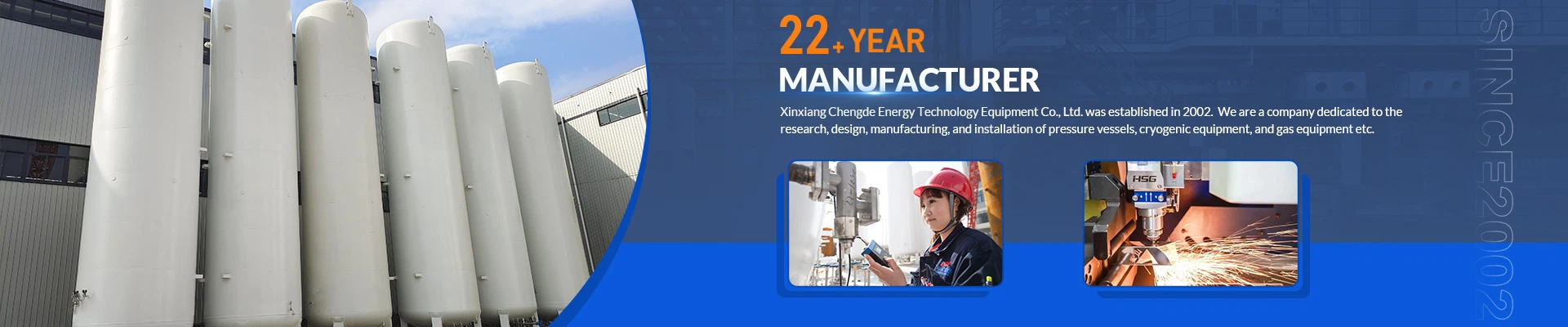
We are a company dedicated to the research, design, manufacturing, and installation of pressure vessels, cryogenic equipment, and gas equipment etc.
Quality assurance
We adhere to stringent quality control processes to deliver reliable and high-performance products that exceed industry standards.
Our certificate
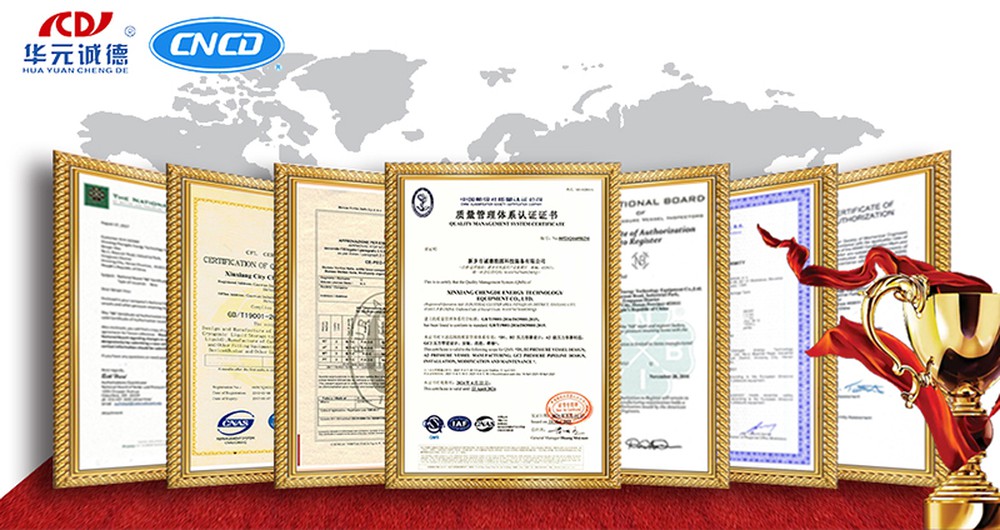
We have been awarded the National Low-Temperature Testing Center Product Type Certification.
Our company holds the D-level (including vacuum insulation vessels) pressure vessel manufacturing (including installation, repair).
After-sales service
Dedicated to strict quality control and thoughtful customer service, our experienced staff members are always available to discuss your requirements and ensure full customer satisfaction.
The Most Common Method of Air Separation in Air Separation Plant
The most common method for air separation is fractional distillation. Cryogenic air separation plant (ASUs) are built to provide nitrogen or oxygen and often co-produce argon. Other methods such as membrane, pressure swing adsorption (PSA) and vacuum pressure swing adsorption (VPSA) are commercially used to separate a single component from ordinary air. High purity oxygen, nitrogen, and argon, used for semiconductor device fabrication, require cryogenic distillation. Similarly, the only viable source of the rare gases neon, krypton, xenon is the distillation of air using at least two distillation columns. Helium is also recovered in advanced air separation processes.
Pure gases can be separated from air by first cooling it until it liquefies, then selectively distilling the components at their various boiling temperatures. The process can produce high purity gases but is energy-intensive. The cryogenic separation process requires a very tight integration of heat exchangers and separation columns to obtain a good efficiency and all the energy for refrigeration is provided by the compression of the air at the inlet of the unit.
To achieve the low distillation temperatures, an air separation unit requires a refrigeration cycle that operates by means of the effect, and the cold equipment has to be kept within an insulated enclosure (commonly called a "cold box"). The cooling of the gases requires a large amount of energy to make this refrigeration cycle work and is delivered by an air compressor. Modern ASUs use expansion turbines for cooling; the output of the expander helps drive the air compressor, for improved efficiency.
Introduction to the Production Process of Air Separation Plant


Before compression the air is pre-filtered of dust. Air is compressed where the final delivery pressure is determined by recoveries and the fluid state (gas or liquid) of the products. Typical pressures range between 5 and 10 bar gauge. The air stream may also be compressed to different pressures to enhance the efficiency. During compression water is condensed out in inter-stage coolers. The process air is generally passed through a molecular sieve bed, which removes any remaining water vapour, as well as carbon dioxide, which would freeze and plug the cryogenic equipment. Molecular sieves are often designed to remove any gaseous hydrocarbons from the air, since these can be a problem in the subsequent air distillation that could lead to explosions.
The molecular sieves bed must be regenerated. This is done by installing multiple units operating in alternating mode and using the dry co-produced waste gas to desorb the water.
Process air is passed through an integrated heat exchanger (usually a plate fin heat exchanger) and cooled against product (and waste) cryogenic streams. Part of the air liquefies to form a liquid that is enriched in oxygen. The remaining gas is richer in nitrogen and is distilled to almost pure nitrogen (typically < 1ppm) in a high pressure (HP) distillation column. The condenser of this column requires refrigeration which is obtained from expanding the more oxygen rich stream further across a valve or through an expander (a reverse compressor).
Alternatively the condenser may be cooled by interchanging heat with a reboiler in a low pressure (LP) distillation column (operating at 1.2-1.3 bar abs.) when the air separation plant is producing pure oxygen. To minimize the compression cost the combined condenser/reboiler of the HP/LP columns must operate with a temperature difference of only 1-2 K, requiring plate fin brazed aluminium heat exchangers. Typical oxygen purities range in from 97.5% to 99.5% and influences the maximum recovery of oxygen. Hence, a certain part of the air is not to be separated and must leave the low pressure column as a waste stream from its upper section.
Because the boiling point of argon (87.3 K at standard conditions) lies between that of oxygen (90.2 K) and nitrogen (77.4 K), argon builds up in the lower section of the low pressure column. When argon is produced, a vapor side draw is taken from the low pressure column where the argon concentration is highest. It is sent to another column rectifying the argon to the desired purity from which liquid is returned to the same location in the LP column. Use of modern structured packings which have very low pressure drops enable argon with less than 1 ppm impurities. Though argon is present in less to 1% of the incoming, the air argon column requires a significant amount of energy due to the high reflux ratio required (about 30) in the argon column. Cooling of the argon column can be supplied from cold expanded rich liquid or by liquid nitrogen.
Finally the products produced in gas form are warmed against the incoming air to ambient temperatures. This requires a carefully crafted heat integration that must allow for robustness against disturbances (due to switch over of the molecular sieve beds).[9] It may also require additional external refrigeration during start-up.
Why Is Air Separation Plant so Popular in the Market?
An air separation plant is an industrial facility used to separate atmospheric air into its primary components (namely nitrogen, oxygen, and, in some cases, argon and other rare gasses). These units are typically composed of elements such as air compressors, an air purification system, heat exchangers, cryogenic cooling systems and distillation columns, among others.
As the growing demand for industrial gasses continues to increase, the asu provides a reliable and efficient method for producing these gasses at the required purity levels. At the same time, the air separation process offers a cost-effective means of producing high-purity gasses compared to other methods, generating them in large quantities, leading to economies of scale and reduced per-unit production costs over time.
Whether you are producing steel or nonferrous metals, traditional petrochemicals, or running the most advanced gasification or oxy-fuel process for your clean energy application, your air separation plant plays a significant role in your operations. The production of the technical gases oxygen and nitrogen can take place in different ways. The choice of the right process depends on the required purity of the end products. A further criterion is the requirement for storability in liquid form. Industrial gases are a fundamental requirement of many industries including steel making, glass making, oil and gas, petrochemicals and many more. Maintaining a reliable supply of high-quality gases is absolutely critical. Whether you need argon, oxygen, or nitrogen, ensuring that there are no dips in quality or supply is paramount to achieving operations goals, especially as efficiency continues to grow as a priority in coming years. The air separation plant remains a key piece of equipment across a wide range of applications and industries.
How the Air Separation Plant Works
While there are various methods that can be performed by an air separation plant, fractional distillation is the primary separation technique employed. The main working principle behind an air separation plant is the separation of air via its liquefying and distilling processes.
In this stage, atmospheric air is drawn into the air separation plant and passed through a series of compressors to increase its pressure. The purpose is to make the subsequent cooling and separation processes more efficient, with typical pressure ranges going between 5 and 10 bar gauge.
Before further processing, the compressed air is typically purified to remove impurities (including moisture, carbon dioxide, or trace contaminants). This step ensures that the separated gasses are of high purity and avoids issues such as the freezing or plugging of the cryogenic equipment.
The now purified, compressed air is cooled down to cryogenic temperatures using a series of heat exchangers and refrigeration cycles. This results in liquefying the air, as cryogenic distillation relies on the differences in boiling points of the various components.
The now cold, liquefied air is fed into a distillation column (or a series of distillation columns), so that the air is separated into its primary components based on differences in boiling points:
Nitrogen has a lower boiling point (-196°C or -321°F) than oxygen (-183°C or -297°F).
Argon, if being separated, has an even lower boiling point (-186°C or -303°F). As the air ascends the column, it is gradually warmed, and different components evaporate at their respective boiling points. For instance, oxygen-rich vapor rises to the top of the column, while nitrogen-rich liquid collects at the bottom. The argon, if present, is usually extracted as a side product at an intermediate point in the column.
Modern air separation plants utilize a Prepurifier Unit, which removes moisture, CO2 and most hydrocarbons from the air. Moisture and CO2 must be removed to prevent ice and dry ice from forming later in the process. A PPU is typically made up of a chiller to cool the air to 40-55F, a condensate separator to remove free water and 2 vessels filled with desiccant and mole sieve material, which adsorbs the contaminants while allowing the air to pass through. One bed is always on line to the process, while the other bed is regenerated with heated waste Nitrogen to remove accumulated contaminants. Beds automatically switch every 5-8 hours. The air from the PPU is very close to moisture and CO2 free.
Some older air separation plants utilize reversing heat exchangers to accomplish front end clean up. These systems contain special cryogenic heat exchangers that freeze out the moisture and CO2, allowing clean air to flow to the distillation process. The passes in the heat exchanger are switched every 3-10 minutes by a series of butterfly and check valves. One pass removes contaminates while the other is regenerated by outgoing waste gases.
The coldbox contains the cryogenic heat exchangers, distillation columns and associated valves and piping. Because parts of this system are very cold, all components are mounted inside the coldbox and then encased in insulation. Coldboxes can be rectangular or cylindrical and are usually tall, some over 200′ depending on capacity and type of Argon system.
All air separation plants except some very small units have expanders. Expanders provide the required refrigeration to produce liquids in the distillation column system. Air, Nitrogen or Waste Nitrogen is fed to the expander, causing the wheel to turn and transfer energy to a compressor, generator or oil brake. This transfer of energy causes the gas to cool. As the process continues, the outlet temperature of the expander eventually reaches design temperature while cooling the column system.
There are 2 common types of liquid Argon systems. Many plants don’ t provide Argon separation equipment at all. In these cases, most Argon simply exits the air separation plant with the waste gas. The first type utilizes a crude Argon column that concentrates Argon to 2-3% O2 content from a feed from the low pressure column of 88-92% O2. This crude Argon is warmed and mixed with Hydrogen before entering a catalytic reactor, where the H2 and O2 combine to make water. This wet Argon is then dried and again cooled to cryogenic temperatures after which the H2 and N2 are removed in a separator and distillation column, respectively.
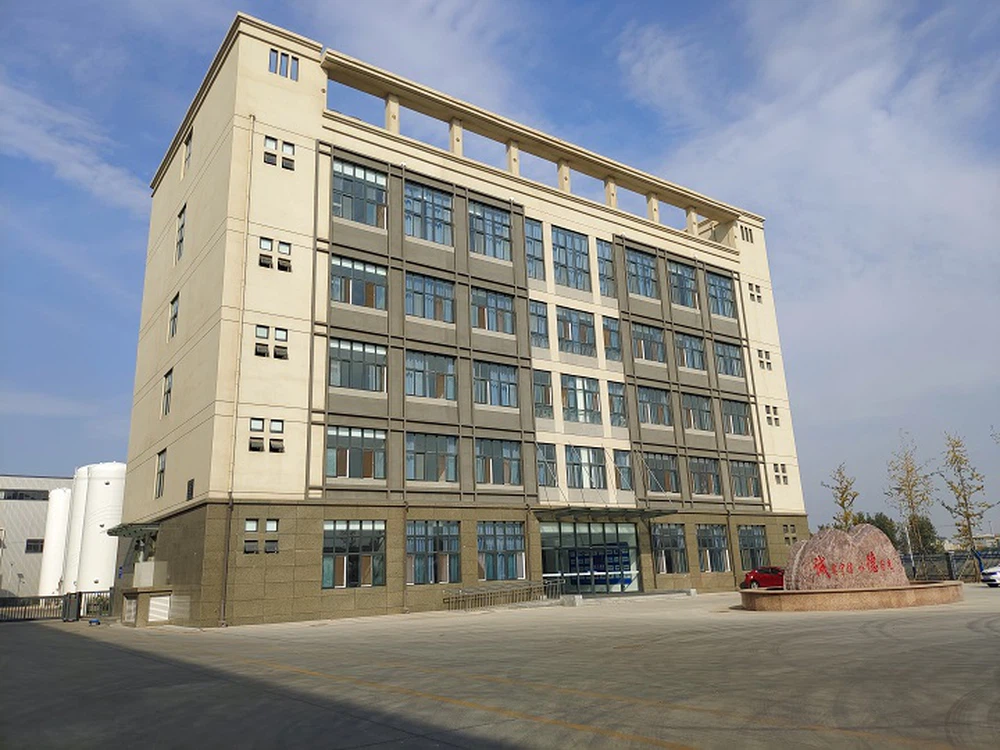
Xinxiang Chengde Energy Technology Equipment Co., Ltd. (formerly Chengde Gas Equipment Co., Ltd.) was established in 2002. We are a company dedicated to the research, design, manufacturing, and installation of pressure vessels, cryogenic equipment, and gas equipment etc. We have been awarded the National Low-Temperature Testing Center Product Type Certification, Henan Famous Brand Product, Henan Province High-tech Enterprise, Henan Province "Specialized, Refined, Unique, and New" Enterprise. We are authorized for foreign trade exports. Additionally, we have obtained the ISO 9001 International Quality System Certification, China Classification Society Factory Approval Certificate, and Ministry of Industry and Information Technology Vehicle Access Certificate, among other honors.
Certificate
FAQ
We're professional air separation plant manufacturers and suppliers in China, specialized in providing high quality customized service. We warmly welcome you to buy air separation plant in stock here from our factory. For price consultation, contact us.
long life air separation equipment, low maintenance air separation plant, flexible air separation solution