

Iso Tank Container
What Is Iso Tank Container
Tank containers are used to ship and store hazardous and non-hazardous materials such as liquids, powders, and gasses. ISO tanks are made out of stainless steel, with insulation, as well as a protective layer of aluminum or polyurethane. This makes them a safe and secure option for transporting a wide variety of materials. Safety and efficiency are synonymous with Iso tank containers. Apart from the fact that tanks can ship a considerable amount of bulk effortlessly, they’ re also extremely durable.
Advantages of Iso Tank Container
Flexibility
One of the main advantages of using Iso tank containers for liquid transportation is their . Various modes of transportation, including ships, trains, and trucks, can easily transport these containers. This makes them an ideal choice for companies that need to transport liquids over long distances and for companies that need to transport liquids to remote locations.
Highly efficient
Another advantage of Iso tank containers is that they are highly efficient. These containers are designed to be filled and emptied quickly, reducing the time required for loading and unloading. This means that companies can transport more liquids in a shorter time, which can help increase their productivity and profitability.
Very safe
Iso tank containers are also very safe to use. They are built to strict international safety standards and have various safety features, such as pressure relief valves and spill containment systems. Companies can transport liquids confidently, knowing that their cargo is always protected.
Durability
Iso tank containers are made from high-grade stainless steel, making them durable and able to withstand the harsh conditions of transportation.
-
![High Quality Cryogenic Industrial 20Ft Iso Tank]() High Quality Cryogenic Industrial 20Ft Iso TankISO tank container is a stainless steel pressure vessel mounted in a tight external frame. The inner tank is mostly made of 316 stainless steel. Most tanks have steam or electric heating devices,...read more
High Quality Cryogenic Industrial 20Ft Iso TankISO tank container is a stainless steel pressure vessel mounted in a tight external frame. The inner tank is mostly made of 316 stainless steel. Most tanks have steam or electric heating devices,...read more -
![20Ft Cryogenic Iso Tank Container Cryogenic Liquid Tank]() 20Ft Cryogenic Iso Tank Container Cryogenic Liquid TankISO tank container is a stainless steel pressure vessel mounted in a tight external frame. The inner tank is mostly made of 316 stainless steel. Most tanks have steam or electric heating devices,...read more
20Ft Cryogenic Iso Tank Container Cryogenic Liquid TankISO tank container is a stainless steel pressure vessel mounted in a tight external frame. The inner tank is mostly made of 316 stainless steel. Most tanks have steam or electric heating devices,...read more -
![2025 Latest Design Asme CNCD Low Price 20 Feet Iso Tank]() 2025 Latest Design Asme CNCD Low Price 20 Feet Iso TankISO tank container is a stainless steel pressure vessel mounted in a tight external frame. The inner tank is mostly made of 316 stainless steel. Most tanks have steam or electric heating devices,...read more
2025 Latest Design Asme CNCD Low Price 20 Feet Iso TankISO tank container is a stainless steel pressure vessel mounted in a tight external frame. The inner tank is mostly made of 316 stainless steel. Most tanks have steam or electric heating devices,...read more -
![20ft Container Liquid Oxygen IsoTank Container]() 20ft Container Liquid Oxygen IsoTank ContainerISO tank container is a stainless steel pressure vessel mounted in a tight external frame. The inner tank is mostly made of 316 stainless steel. Most tanks have steam or electric heating devices,...read more
20ft Container Liquid Oxygen IsoTank ContainerISO tank container is a stainless steel pressure vessel mounted in a tight external frame. The inner tank is mostly made of 316 stainless steel. Most tanks have steam or electric heating devices,...read more -
![Energy Storage Container Iso Standard 20Ft Cryogenic Liquid Lox Lin Lar Iso Tank Container]() Energy Storage Container Iso Standard 20Ft Cryogenic Liqu...Energy Storage Container Iso Standard 20Ft Cryogenic Liquid Lox Lin Lar Iso Tank Container The Tank Container International Standard Tank is a stainless steel pressure vessel that is mounted in a...read more
Energy Storage Container Iso Standard 20Ft Cryogenic Liqu...Energy Storage Container Iso Standard 20Ft Cryogenic Liquid Lox Lin Lar Iso Tank Container The Tank Container International Standard Tank is a stainless steel pressure vessel that is mounted in a...read more -
![CNG Tube Skid Trailer 40ft Gas Tube Bundle Skid Container Trailer For Cng Station]() CNG Tube Skid Trailer 40ft Gas Tube Bundle Skid Container...CNG Tube Skid Trailer 40ft Gas tube bundle Skid Container Trailer for cng station Product Description Product Description Large capacity seamless steel gas cylinders are mainly usedto transport...read more
CNG Tube Skid Trailer 40ft Gas Tube Bundle Skid Container...CNG Tube Skid Trailer 40ft Gas tube bundle Skid Container Trailer for cng station Product Description Product Description Large capacity seamless steel gas cylinders are mainly usedto transport...read more -
![Hot Sales 2024 Hydrogen Gas Tube Skid Container 40ft 9tubes]() Hot Sales 2024 Hydrogen Gas Tube Skid Container 40ft 9tubesHot sales 2024 Hydrogen gas tube skid container 40ft 9tubes Product Description Product Description Large capacity seamless steel gas cylinders are mainly usedto transport CNG (compressed natural...read more
Hot Sales 2024 Hydrogen Gas Tube Skid Container 40ft 9tubesHot sales 2024 Hydrogen gas tube skid container 40ft 9tubes Product Description Product Description Large capacity seamless steel gas cylinders are mainly usedto transport CNG (compressed natural...read more -
![Factory Price 20Ft Customized Transport Iso Tank Container]() Factory Price 20Ft Customized Transport Iso Tank ContainerISO tank container is a stainless steel pressure vessel mounted in a tight external frame. The inner tank is mostly made of 316 stainless steel. Most tanks have steam or electric heating devices,...read more
Factory Price 20Ft Customized Transport Iso Tank ContainerISO tank container is a stainless steel pressure vessel mounted in a tight external frame. The inner tank is mostly made of 316 stainless steel. Most tanks have steam or electric heating devices,...read more -
![Liquid Nitrogen Storage Transport Iso Tank Container]() Liquid Nitrogen Storage Transport Iso Tank ContainerISO tank container is a stainless steel pressure vessel mounted in a tight external frame. The inner tank is mostly made of 316 stainless steel. Most tanks have steam or electric heating devices,...read more
Liquid Nitrogen Storage Transport Iso Tank ContainerISO tank container is a stainless steel pressure vessel mounted in a tight external frame. The inner tank is mostly made of 316 stainless steel. Most tanks have steam or electric heating devices,...read more -
![Container Liquid Oxygen Tank Container]() Container Liquid Oxygen Tank ContainerISO tank container is a stainless steel pressure vessel mounted in a tight external frame. The inner tank is mostly made of 316 stainless steel. Most tanks have steam or electric heating devices,...read more
Container Liquid Oxygen Tank ContainerISO tank container is a stainless steel pressure vessel mounted in a tight external frame. The inner tank is mostly made of 316 stainless steel. Most tanks have steam or electric heating devices,...read more -
![Stationary 20Ft Cryogenic Lo2 Iso Tank]() Stationary 20Ft Cryogenic Lo2 Iso TankISO tank container is a stainless steel pressure vessel mounted in a tight external frame. The inner tank is mostly made of 316 stainless steel. Most tanks have steam or electric heating devices,...read more
Stationary 20Ft Cryogenic Lo2 Iso TankISO tank container is a stainless steel pressure vessel mounted in a tight external frame. The inner tank is mostly made of 316 stainless steel. Most tanks have steam or electric heating devices,...read more -
![CNCD Tank 20Ft Food Grade Energy Storage Container]() CNCD Tank 20Ft Food Grade Energy Storage ContainerISO tank container is a stainless steel pressure vessel mounted in a tight external frame. The inner tank is mostly made of 316 stainless steel. Most tanks have steam or electric heating devices,...read more
CNCD Tank 20Ft Food Grade Energy Storage ContainerISO tank container is a stainless steel pressure vessel mounted in a tight external frame. The inner tank is mostly made of 316 stainless steel. Most tanks have steam or electric heating devices,...read more


Why Choose Us
Profession team
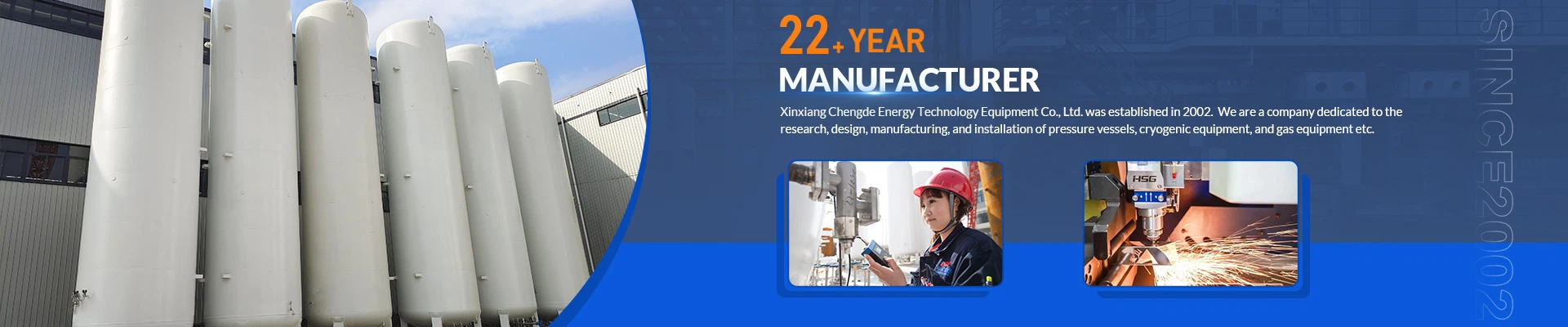
We are a company dedicated to the research, design, manufacturing, and installation of pressure vessels, cryogenic equipment, and gas equipment etc.
Quality assurance
We adhere to stringent quality control processes to deliver reliable and high-performance products that exceed industry standards.
Our certificate
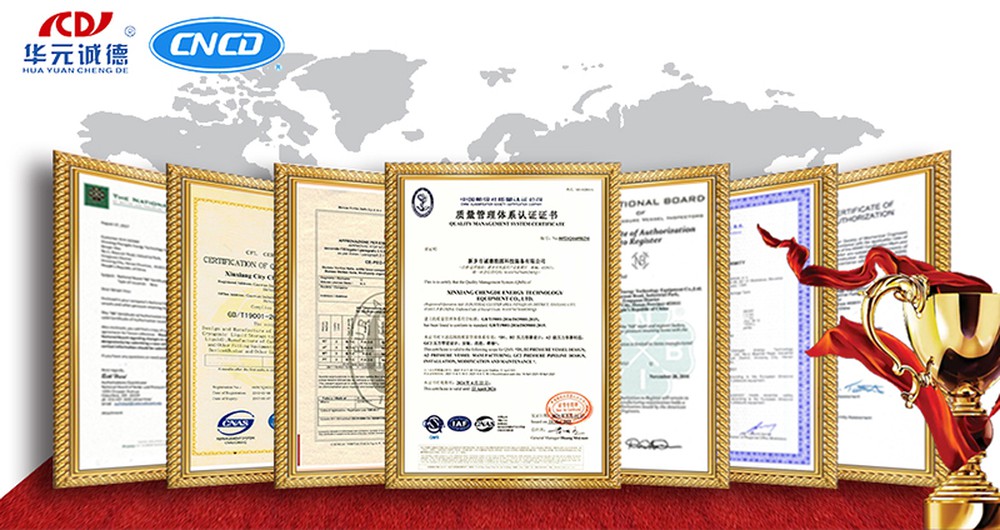
We have been awarded the National Low-Temperature Testing Center Product Type Certification.
Our company holds the D-level (including vacuum insulation vessels) pressure vessel manufacturing (including installation, repair).
After-sales service
Dedicated to strict quality control and thoughtful customer service, our experienced staff members are always available to discuss your requirements and ensure full customer satisfaction.
Iso Tank Containers Are Favored by the Market
To the untrained eye they may look like simply metal cans, however their structure is more scientific, and their manufacturing is more highly engineered than first imagined. Specifically, they are stainless-steel vessels which come in a variety of sizes but most commonly measure 6.05m by 2.4m and 2.55m tall (similar to a standard shipping container). For insulation and protection, the steel is encased in a layer of polyurethane and aluminium, all kept inside a steel framework. They can handle a payload of 32,350kg, a volume of between 17,500 and 26,000 litres, at a pressure of 4 Bar, and at a maximum temperature of 120°C.It is difficult to know how many Iso containers there are in the world, but there are believed to be about 800,000 in use at any one time. While they are modest steel containers, they are in fact the unsung heroes of the chemical industry and have grown to be an essential part of the logistics sector.
Iso tanks are capable of carrying a large range of raw materials, including bulk liquids, toxic chemicals, catalysts, and intermediates. They also keep contaminants out, and are thus suitable for more sensitive chemical products, such as food additives and flammable ingredients. This adaptability is a big benefit for sectors with different cargo needs, such as the chemical industry. Iso tanks adhere to strict safety regulations, as they can be fitted with safety measures including spill containment systems, emergency venting, and pressure relief valves to guarantee the secure transportation of hazardous products and chemicals. Because Iso tanks do not require packing materials like chemical drums or barrels, they are a cost-effective option. Their simple use also reduces handling fees, lowers cleaning costs, and removes packaging disposal requirements. It is important to make sure the Iso tank is appropriate for the goods/chemical products being transported, especially in the case of toxic or combustible chemicals.
What are ISO Tank Containers Made of?


Not only are shipping containers great solutions for transporting cargo across the ocean, but they’ re also perfect places to store diverse types of goods, such as commercial products, furniture, books, and more! Plus, because shipping containers come in many different sizes and are made of highly tenable materials, they are capable of protecting goods from even severe weather conditions, from rain and winds to snow and storms.
Iso tank containers, which are usually used for the transportation of liquid products, are designed based on Iso standards (International Organization for Standardization). These are manufactured to transfer hazardous and non-hazardous liquids in bulk, and there are certain requirements they all have to fulfill in relation to dimensions and features. For example, the frame must be approximately 6 meters long.
Iso containers are composed of stainless steel in a cylindrical form and have numerous protective coatings around them. There is a manhole and at least one pipe on the top of each container, and another pipe at the bottom. Additionally, depending on the cargo type, different skins can be utilized. On the other hand, bulk containers are versatile in terms of size options and can typically be modified to meet your requirements.
The international standard for an Iso tank frame is the same as a general purpose unit, 20ft length, 8ft wide and 8ft 6 inch in height, made from steel. Inside the tank frame sits the cylindrical pressure vessel which can then be further adapted depending on what substance it needs to transport. Standard Iso tanks can transport from 17,500 to 26,000 litres in the cylinder. The tank itself needs to be at least 80% full to ensure the contents don’ t surge too much during transit but less than 95% full to allow room for thermal expansion. The depth and pressure rating of the steel cylinder is dictated by the regulatory codes applied to it. The shell vessel needs to pass a minimum test pressure which is based on the tank’ s assigned ‘T’ code.
For convenient, quick and secure handling of the material, all the containers have the same sizes, with precisely stable frame-structure around them and common links for the handling devices to connect properly. There is a wide range of tank containers. The type and other adjustments, including valves loading fittings and heating system depend on what they need to be used for. Different fitments, such as valves stacking fittings and warming frameworks, vary as per the end client’ s prerequisites.
How Can Use Iso Tank Container to Manage Our Cargo Effectively?
Iso tank containers are designed and certified to transport a range of both hazardous and non-hazardous cargo and because they function as a shipping container that can be transported internationally, they are certified to international safety and performance standards.
These tank containers are tough. Pressure load tests are played out each time a container is unloaded. As the Iso tank containers ship all types of hazardous or non-hazardous materials, they need to be certified and examined. You can load and unload a tank container from the top and the base by connecting the hoses to the valves. There are a vent and one valve on the top of a standard tank vessel, and there is a valve at the base. The Iso frame makes these tank containers dispatched with intermodular delivery choices that incorporate container ships, rail lines and trucks.
Tank containers, at any rate, should always be 80% full, to prevent dangerous flooding of fluids during the transit. You can’t fill them more than 95%; otherwise, there will be no space to consider thermal expansion.
Comparative Explanation of Iso Tank Containers and Traditional Containers
In the dynamic world of cargo transport, the choice between Iso tank containers and traditional containers significantly impacts efficiency, cost-effectiveness, and cargo safety for businesses engaged in bulk supply. When it comes to transporting liquids, businesses are confronted with a myriad of options. In the realm of business-to-business operations, two predominant choices for bulk supply stand out: Iso tank containers and traditional containers. Iso tank containers are purpose-built for liquid transport, offering specialized features. The selection of the appropriate container solution holds the potential to significantly impact efficiency, cost-effectiveness, and cargo safety. As we delve into the comparison between Iso tank containers and traditional containers, it becomes evident that these two serve distinct shipping needs.
While both dry freight containers and Iso tank containers adhere to Iso standards, they differ in purpose and design. Dry freight containers, typically 20 or 40 feet in size, are versatile for various cargo types, while Iso tank containers, often 20 feet in size, specialize in transporting bulk liquids and gasses. Iso tank containers, commonly known as Iso tanks, have transformed the transportation of liquids and gasses. Crafted in adherence to International Organization for Standardization (Iso) specifications, these containers boast standardized dimensions and fittings. Designed for versatility, Iso tanks can transport a diverse range of goods, including chemicals, food-grade liquids, gasses, and hazardous materials.
The adaptability of Iso tank containers stems from their specialized construction, featuring reinforced walls, internal baffles, and secure fittings. This design makes them suitable for transporting various cargo types without extensive modifications. Their logistics marvel lies in eliminating the need for additional packaging, such as drums or intermediate bulk containers (IBCs), reducing costs and mitigating leakage risks during transit.
Iso tank containers come in various types, each designed for specific cargo types and transportation requirements.Standard tank containers are the most common type, designed for the transport of non-hazardous and non-refrigerated liquids like water, oils, and food-grade products. Reefer tank containers with advanced temperature control systems, reefer tank containers are ideal for perishable goods such as fruits, vegetables, and chemicals that require precise temperature management. Gas tank containers designed for the safe transport of liquefied gases, including propane, butane, and other petrochemicals. These containers adhere to strict safety standards. Swap body tank containers are designed for road, rail and short-sea (ferry) transport in specific markets. Primarily offered in the market, the swap body design allows for larger tank capacities than standard iso tanks containers.
Iso tank containers have found applications across various industries. Iso tank containers are extensively used to transport a wide range of chemicals, including hazardous materials. Their design ensures the integrity and safety of the cargo. Reefer tank containers play a pivotal role in transporting perishable goods like fruit juices, wines, and dairy products, maintaining the required temperature throughout the journey. The pharmaceutical sector relies on iso tank containers to transport critical medical supplies and pharmaceutical ingredients, ensuring product integrity. Gas tank containers are indispensable for transporting liquefied gases used in various industrial processes, such as petrochemical refining. Iso tank containers can also be repurposed for eco-friendly applications like storing and transporting non-potable water for industrial use or emergency response situations. Iso tank containers are a versatile and efficient solution for transporting liquid cargo across industries.
The Development History of Iso Tank Containers
The container was made as a standard box container, so it could be used as the outer packaging to the then traditional methods of unloading the contents from a truck, into a ship, and then into another truck for final delivery. This enabled a more flexible mode of transportation, thus improving the handling and storage methods as well as eliminating the added cost of truck transportation. Present day the container dimensions have standardized to an international standard size of 20’ long, 8’ wide and 8’ 6’ high - the iso (international standards organization) frame.
A corner casting is fitted at each corner of the container. This allows the container to sit on a railcar, a chassis, be handled by a spreader or transported by ship. The Iso is locked in position by a twist lock twist into the corner casting, preventing it to move during shipment. The 1960’ s brought us to where we are present day, a circular vessel mounted in a rectangular steel framework.
The iso tank container’ s development has allowed the carriage of all types of products ranging from, but not limited to, portable (food grade) liquids, nonhazardous, and hazardous aqueous materials, including corrosives, explosives, toxics, and flammables. Utilizing a tank container helps eliminate the risks in transferring solutions (liquids) from one vessel to another. This provides a cost effective, secure and extremely safe viable mode of shipment. Upon the tank container being discharged, it is taken to an acceptable cleaning terminal, thoroughly cleaned for that cargo, allowing it to carry its next load.
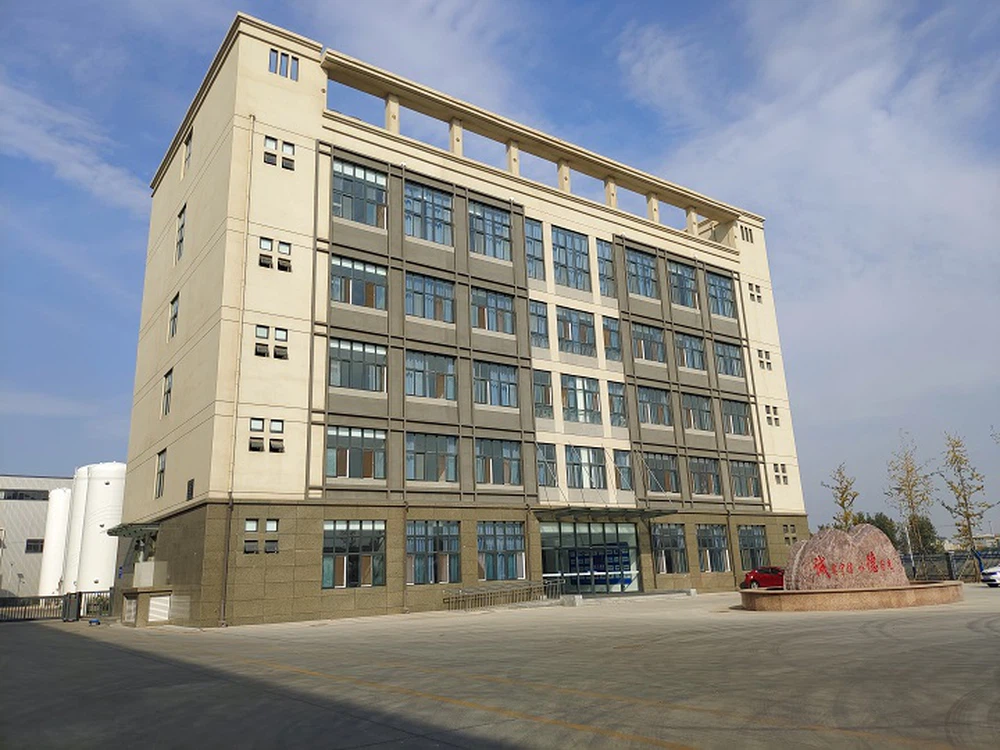
Xinxiang Chengde Energy Technology Equipment Co., Ltd. (formerly Chengde Gas Equipment Co., Ltd.) was established in 2002. We are a company dedicated to the research, design, manufacturing, and installation of pressure vessels, cryogenic equipment, and gas equipment etc. We have been awarded the National Low-Temperature Testing Center Product Type Certification, Henan Famous Brand Product, Henan Province High-tech Enterprise, Henan Province "Specialized, Refined, Unique, and New" Enterprise. We are authorized for foreign trade exports. Additionally, we have obtained the ISO 9001 International Quality System Certification, China Classification Society Factory Approval Certificate, and Ministry of Industry and Information Technology Vehicle Access Certificate, among other honors.
Certificate
FAQ
We're professional iso tank container manufacturers and suppliers in China, specialized in providing high quality customized service. We warmly welcome you to buy iso tank container in stock here from our factory. For price consultation, contact us.
indoor air separation plant, tanker truck capacity, tanker truck durability