

PSA Nitrogen Generator
What Is PSA Nitrogen Generator
Psa nitrogen generators are supplied to our customers as complete systems, ready for hookup to a compressed air supply, and include air filters and controls for automatic operation. Psa nitrogen generators are typically used in applications where the purity requirement is higher than 99.5% (0.5% o2 or below).Psa technology utilizes two towers which are filled with carbon molecular sieve (cms). Compressed air enters the bottom of the ‘online’ tower and flows up through the cms. Oxygen and other trace gases are preferentially adsorbed by the cms, allowing nitrogen to pass through. After a pre-set time the on-line tower automatically switches to the regenerative mode, venting contaminants from the cms.
Advantages of PSA Nitrogen Generator
Quality of nitrogen gas
Psa nitrogen generator allow for the production of high purity nitrogen from the surrounding atmosphere, which can provide up to 99.9995% nitrogen depending on the nitrogen generator system.
Reliability of nitrogen generator
Psa nitrogen generator allow for continuous operation 24/7, giving you an uninterrupted flow of gas when it's needed.
Flexibility of nitrogen gas supply
The application of the Psa nitrogen generator can be diverse and altered at short notice. So long as the Psa nitrogen generator can meet the flow and purity requirements of the application it can be changed from one day to the next with minimal hassle.
Long lasting nitrogen supply
On-site generators are highly resistant to vibration and shocks, chemically inert to greases and moisture insensitive. With proper, planned, in most cases annual, maintenance a generator can easily last a decade or more.
-
![Psa Nitrogen Plant]() Psa Nitrogen PlantPressure swing adsorption psa nitrogen plant is a gas separation equipment that takes carbon molecular sieve as adsorbentread more
Psa Nitrogen PlantPressure swing adsorption psa nitrogen plant is a gas separation equipment that takes carbon molecular sieve as adsorbentread more -
![Psa Nitrogen Gas Generator]() Psa Nitrogen Gas GeneratorPsa Nitrogen Gas Generator More efficient and stable molecular sieves and special PSA energy-saving technology are selected, with lower energy consumption;read more
Psa Nitrogen Gas GeneratorPsa Nitrogen Gas Generator More efficient and stable molecular sieves and special PSA energy-saving technology are selected, with lower energy consumption;read more


Why Choose Us
Profession team
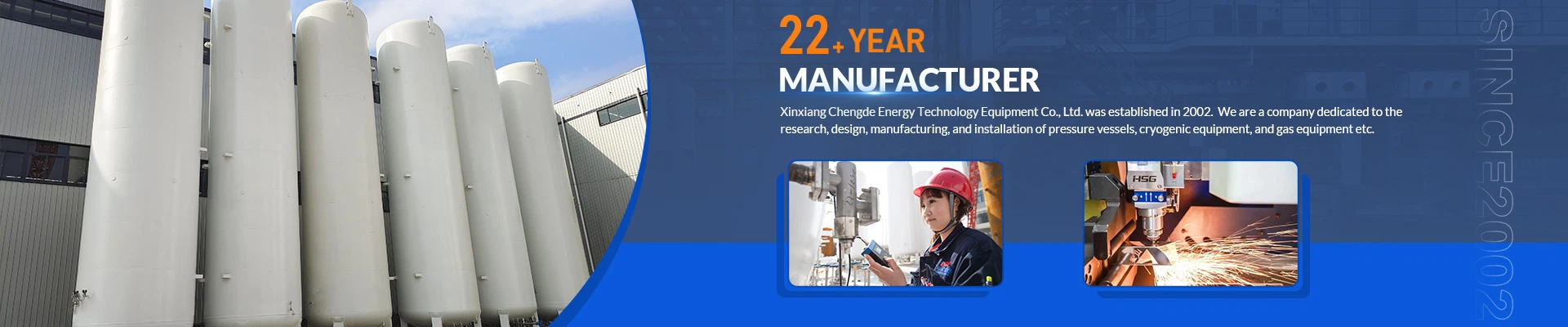
We are a company dedicated to the research, design, manufacturing, and installation of pressure vessels, cryogenic equipment, and gas equipment etc.
Quality assurance
We adhere to stringent quality control processes to deliver reliable and high-performance products that exceed industry standards.
Our certificate
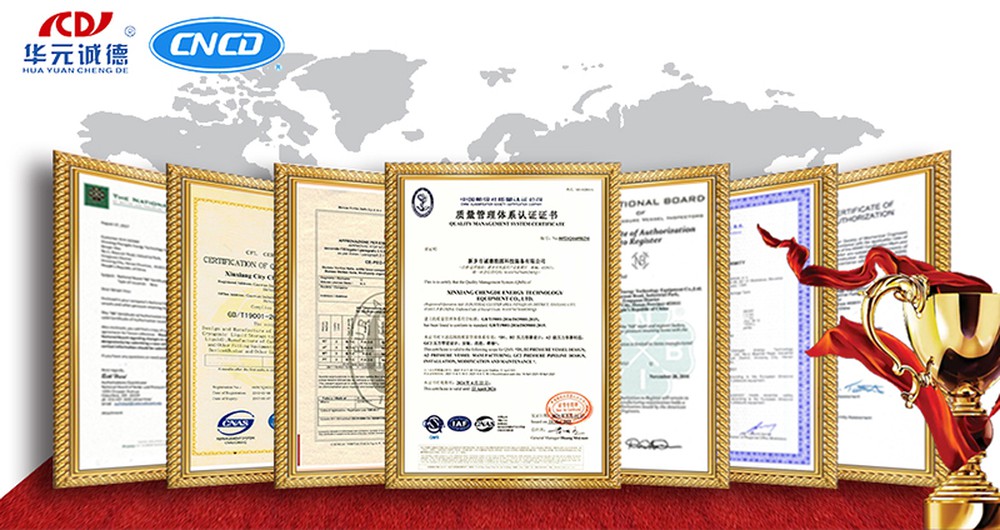
We have been awarded the National Low-Temperature Testing Center Product Type Certification.
Our company holds the D-level (including vacuum insulation vessels) pressure vessel manufacturing (including installation, repair).
After-sales service
Dedicated to strict quality control and thoughtful customer service, our experienced staff members are always available to discuss your requirements and ensure full customer satisfaction.
How the PSA Nitrogen Generator Uses Pressure Swing Adsorption (Psa) Technology to Generate Nitrogen
When producing your own nitrogen, it is important to know and understand the purity level you want to achieve. Some applications require low purity levels (between 90 and 99%), such as tire inflation and fire prevention, while others, such as applications in the food and beverage industry or plastic molding, require high levels (from 97 to 99.999%). In these cases Psa technology is the ideal and easiest way to go. In essence a nitrogen generator works by separating nitrogen molecules from the oxygen molecules within the compressed air. Pressure Swing Adsorption does this by trapping oxygen from the compressed air stream using adsorption. Adsorption takes place when molecules bind themselves to an adsorbent, in this case the oxygen molecules attach to a carbon molecular sieve (CMS). This happens in two separate pressure vessels, each filled with a CMS, that switch between the separation process and the regeneration process. For the time being, let us call them tower A and tower B. For starters, clean and dry compressed air enters tower A and since oxygen molecules are smaller than nitrogen molecules, they will enter the pores of the carbon sieve. Nitrogen molecules on the other hand cannot fit into the pores so they will bypass the carbon molecular sieve. As a result, you end up with nitrogen of desired purity. This phase is called the adsorption or separation phase. It does not stop there however. Most of the nitrogen produced in tower A exits the system (ready for direct use or storage), while a small portion of the generated nitrogen is flown into tower B in the opposite direction (from top to bottom).
This flow is required to push out the oxygen that was captured in the previous adsorption phase of tower B. By releasing the pressure in tower B, the carbon molecular sieves lose their ability to hold the oxygen molecules. They will detach from the sieves and get carried away through the exhaust by the small nitrogen flow coming from tower A. By doing that the system makes room for new oxygen molecules to attach to the sieves in a next adsorption phase. We call this process of ‘cleaning’ an oxygen saturated tower regeneration. First, tank A is in the adsorption phase while tank B regenerates. In the second stage both vessels equalize pressure to prepare for the switch. After the switch, tank A starts regenerating while tank B generates nitrogen.
At this point, the pressure in both towers will equalize and they will change phases from adsorbing to regenerating and vice versa. The CMS in tower A will get saturated, while tower B, due to the depressurization, will be able to restart the adsorption process. This process is also referred to as ‘swing of pressure’, which means that it allows for certain gases to be captured at higher pressure and released at lower pressure. The two tower Psa system allows for continuous nitrogen production at a desired purity level.
PSA Nitrogen Generator Working Principle


The working principle of a Psa nitrogen generator is that under high pressures, nitrogen gas exhibits a strong affinity for adsorbent media such as zeolite or granular activated carbon (GAC). Moreover, various gases can be absorbed from a mixture at different rates, depending on the amount of pressure applied. When the pressure is lowered, the gas is desorbed.
A typical Psa generator set-up comprises two tower, one for absorption and the other for regeneration. Air coming from a compressor enters the absorption tower and contacts the adsorbent which inhibits the nitrogen gas and allows oxygen, carbon dioxide, water molecules, and impurities to pass through. To recover the absorbed N2, we simply reduce the pressure. At any given time, while the adsorption tower is separating the gas, the other is in regeneration mode.
Psa type nitrogen generators are used extensively in food and beverage packaging, electronics manufacturing, chemical industries, medical facilities, wastewater treatment plants and more to separate high-purity nitrogen gas from a compressed air stream.Nitrogen purity using the Psa technique can be up to 99.999%, depending on the efficiency of the adsorbent and reliability of the overall system.
To separate nitrogen gas, dry, compressed air is applied over the material which is housed in a cylindrical vessel (it is essential to use dehumidified air to prevent clogging of the membrane fibers). The membrane allows N2 to pass through but inhibits oxygen, water vapor, inert gases, and air-borne impurities. The selectivity of the membranes is highly dependent on pore size. Membrane type nitrogen generators can generate nitrogen gas with purities up to 99.95% per volume.
Process Technology of PSA Nitrogen Generator
Psa nitrogen generator use the basic principle of passing air over a bed of engineered adsorbent material, which bonds with oxygen, leaving a rich stream of nitrogen gas to exit.The inlet (ambient) air is compressed by an air compressor, dried by an air dryer, and filtered, before entering the process vessels.
The pre-treated and filtered air is directed into a vessel filled with carbon molecular sieve (CMS) where the oxygen is adsorbed preferentially in the CMS pores. This allows concentrated nitrogen, with an adjustable purity, (as low as 50 ppm O2) to remain in the gas stream and flow out of the vessel. Before the full adsorption capacity of the CMS is reached, the separation process interrupts the inlet flow, and switches to the other adsorber vessel.
The oxygen-saturated CMS is regenerated (the adsorbed gases are released) by means of a pressure reduction, below that of the previous adsorption step. This is achieved by a simple pressure release system where the exhaust (waste) gas stream is vented from the vessel, usually through a diffuser or silencer and back into safe surrounding atmosphere. The regenerated CMS is refreshed and can now be used again for the generation of nitrogen.
Adsorption and desorption should take place alternately at equal time intervals. This means that the continuous generation of nitrogen can be achieved by using two adsorbers; while one is adsorbing, the other is in regeneration mode; and switching back and forth, provides for a continuous and controlled flow of nitrogen.
Constant nitrogen product flow and purity is ensured by a connected product buffer vessel that stores the nitrogen output. This can be designed for nitrogen purities up to 99.9995% and pressures up to 150 psig (10 bar).
Important Differences between PSA Nitrogen Generator and Membrane Nitrogen
Have pressure vessel adsorption beds and a lot more moving parts including valves and actuators Valve operation on Psa nitrogen generator nitrogen generators are automatically controlled using a programmable logic controller or PLC. Membrane systems on the other had have less moving parts and no bulky pressure vessels to hold CMS. They are typically relatively smaller and lighter and commonly used in applications where a mobile nitrogen source is required.
Psa nitrogen generator systems can achieve higher nitrogen purities more efficiently than membrane systems. Psa nitrogen generator systems can typically achieve nitrogen purities ranging from 95% to 99.999%. Membrane systems offer decent efficiency at nitrogen purities ranging from 95% to 99%.
At purity levels above 98%, the Psa nitrogen generator nitrogen generators are significantly more cost efficient than membrane systems to operate. Membrane nitrogen generators are nearly as efficient as Psa nitrogen generator nitrogen generators for purity levels up to 98%. At nitrogen purities above 98% membrane efficiency drops off significantly when compared to Psa nitrogen generator.
Psa nitrogen generator systems are more sensitive to the presence of water than membrane systems. The CMS in Psa nitrogen generator systems is sensitive to higher concentrations of moisture. Nitrogen flow capacity and purity will decrease as moisture concentration increases and over time may lead to permanent damage of CMS.
It should be noted that neither Psa nitrogen generator or membrane nitrogen generators can tolerate exposure to water contamination for prolonged periods of time. A compressed air dryer should always be used to dry compressed air before it enters either type of nitrogen generator. Both Psa nitrogen generator and membrane systems are severely affected by any oil leaking into the system. In both cases, oil contamination will cause a permanent and irreversible decline in performance of the nitrogen generator. The aging of membranes is the main concern in membrane nitrogen generators. Performance capacity of membrane nitrogen generators will typically gradually decline over a period of years. The system can perform reasonably well for over 10 years if proper maintenance is followed, and the compressed air filtration is replaced as instructed by the manufacturer.
Psa nitrogen generator nitrogen generating systems usually have a longer life cycle than membrane nitrogen generating systems. This is because the CMS does not lose capacity over time so long as contamination is avoided. This can help the Psa nitrogen generator nitrogen generator continue performing at a high level for over 20 years assuming proper maintenance practices are adhered to.
The Psa nitrogen generator unit consists of three vessels, consisting of two adsorption towers (AB towers) filled with carbon molecular sieves and aluminum oxide, and a nitrogen buffer tank. The unit also contains a control cabinet, a piece of PLC, one piece of touch screen and one piece of oxygen analyzer. The main component of the whole nitrogen generator is the carbon molecular sieve (CMS). The CMS is like a sponge. When the A tower is pressurized, it will adsorb oxygen molecules, and then let the nitrogen molecules pass through to the nitrogen buffer tank. After one minute of adsorption saturation, the PLC automatically switches to the B tower, and the B tower starts to adsorb oxygen and allows nitrogen to pass; at the same time, the A tower becomes normal pressure and the adsorbed oxygen is released(vent). The two towers of AB will automatically switch alternately every minute to continuously supply nitrogen into the nitrogen buffer tank.
If the working pressure needs to be higher, a booster is needed to increase the pressure required. It is not possible to use a high-pressure air compressor to directly supply high-pressure nitrogen, because the optimal working pressure of CMS is 0.8Mpa, and excessive pressure will directly cause the molecular sieve to become powder.
Things to Note When Choosing a PSA Nitrogen Generator
When to choose Psa nitrogen generator? Opt for Psa nitrogen generators when your application needs high nitrogen purity. Industries include semiconductor and electronics manufacturing, food and beverage, pharmaceutical or laboratory nitrogen production.
Since the Psa nitrogen generator contains pressure vessel, the tank and the adsorption tower must have a formal pressure vessel certificate, because some manufacturers will weld the adsorption tower by themselves in order to save costs. The uncertified equipment is not only safe, but also has a short life span. The pressure vessel standard requirements are different in different regions.
Pay attention to the altitude of the factory location, and reduce the air compressor air consumption by 6% for every 1000 meters of altitude. If there is insufficient gas, it will cause insufficient gas consumption and have a great impact on production.
Carbon molecular sieves are the core materials for the system. Generally, molecular sieves can be used for about 8 years. But it should be noted that some manufacturers will use cheap waste-recovered molecular sieves, which seriously affect the efficiency and life of the equipment.
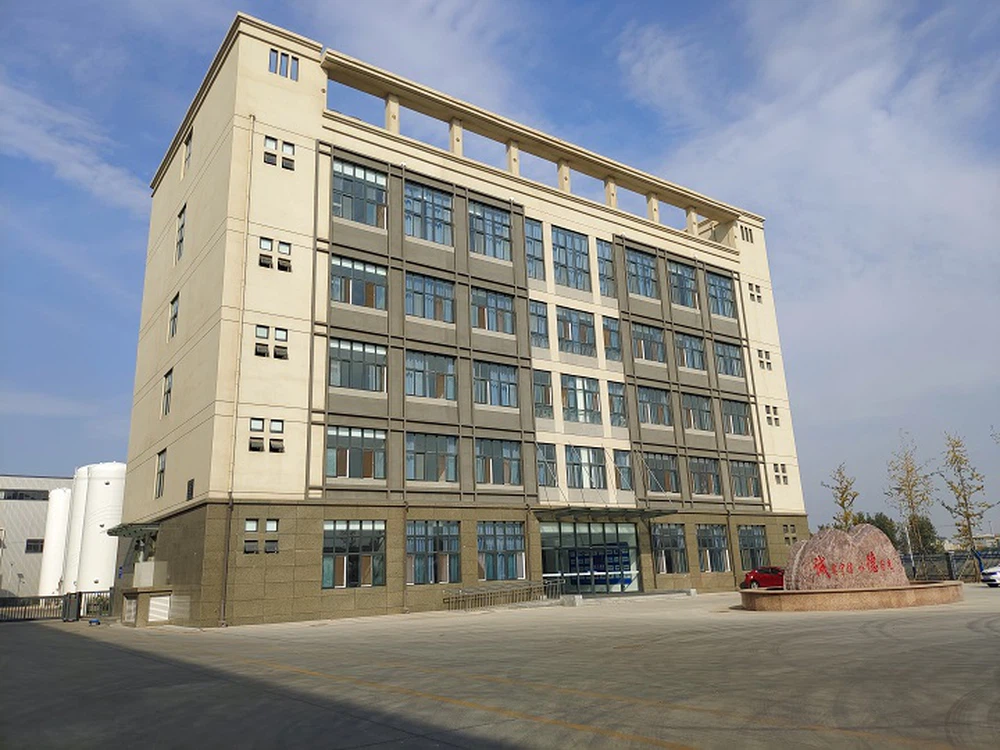
Xinxiang Chengde Energy Technology Equipment Co., Ltd. (formerly Chengde Gas Equipment Co., Ltd.) was established in 2002. We are a company dedicated to the research, design, manufacturing, and installation of pressure vessels, cryogenic equipment, and gas equipment etc. We have been awarded the National Low-Temperature Testing Center Product Type Certification, Henan Famous Brand Product, Henan Province High-tech Enterprise, Henan Province "Specialized, Refined, Unique, and New" Enterprise. We are authorized for foreign trade exports. Additionally, we have obtained the ISO 9001 International Quality System Certification, China Classification Society Factory Approval Certificate, and Ministry of Industry and Information Technology Vehicle Access Certificate, among other honors.
Certificate
FAQ
We're professional psa nitrogen generator manufacturers and suppliers in China, specialized in providing high quality customized service. We warmly welcome you to buy psa nitrogen generator in stock here from our factory. For price consultation, contact us.
lng tank for marine tankers, marine lng tanker tank, marine lng ferry tank