

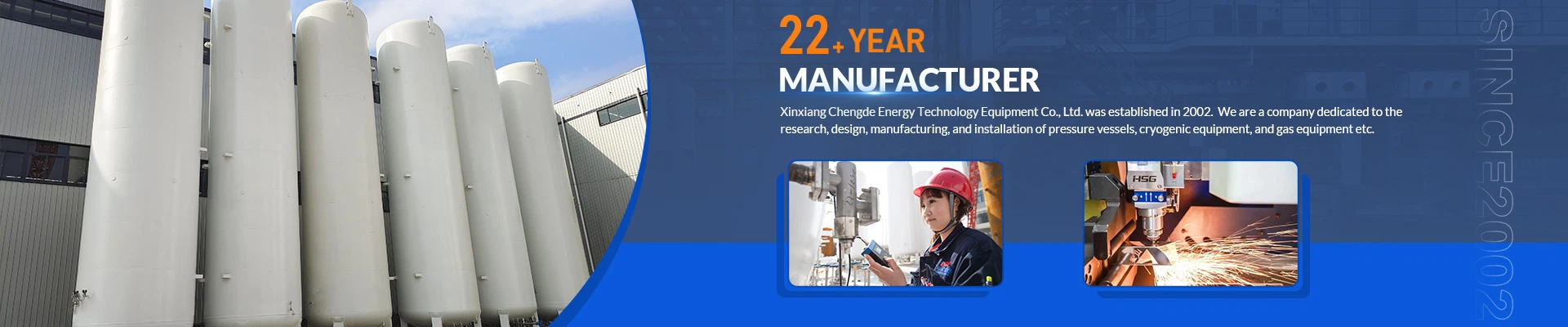
Air separation tower is a kind of equipment used in large-scale oxygen production industry. Its structure and principle are based on physical principles such as energetics, kinetics and molecular physics.
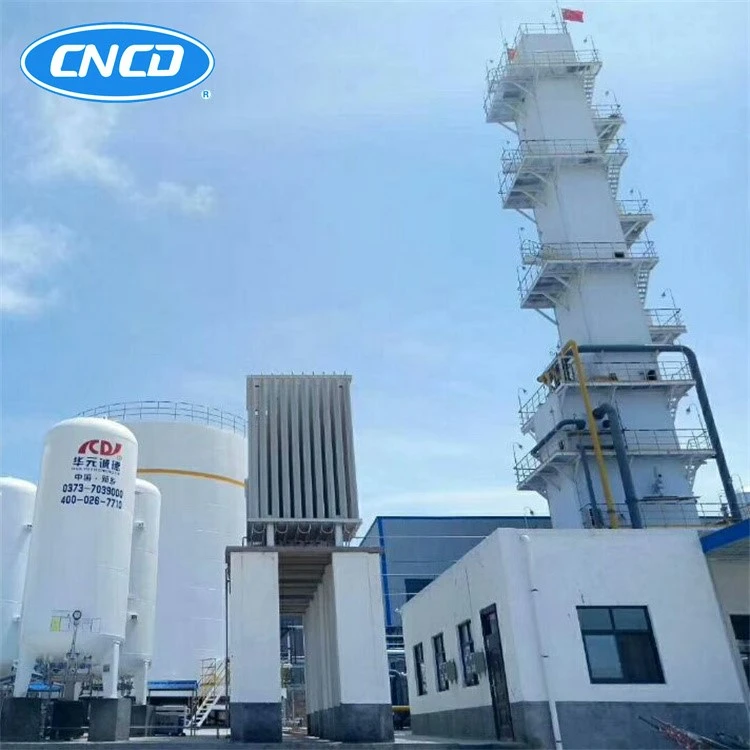
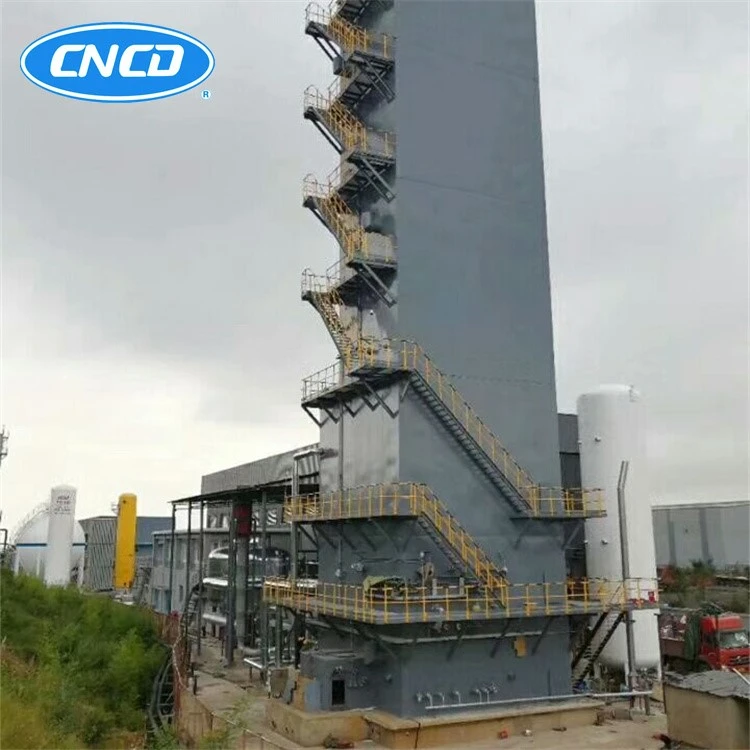
Structure of air separation tower
The structure of air separation tower is designed to achieve air separation. Its main components include:
Tower body: the main structure of air separation tower, usually built like an iron tower to adapt to its height and process flow needs.
Padding: the interior is filled with fillings, such as polypropylene ball rings, which are used to enhance the contact between gas and liquid and promote the heat exchange process.
Water distributor: used to distribute cooling water or other media to ensure uniform wetting of the packing layer and improve heat exchange efficiency.
Air compressor: used to compress the air entering the tower body, increase its pressure and temperature, and facilitate the subsequent separation process.
Turbine expander: using the turbine principle, the temperature of the air is reduced through the expansion process to facilitate liquefaction separation.
Distillation tower: used to further separate oxygen and nitrogen in the air, achieved through changes in temperature and pressure.
Working principle of air separation tower
The working principle of air separation tower is based on cryogenic technology, and air separation is achieved through the following steps:
Air pretreatment: The air is first precooled and purified to remove impurities and water vapor to ensure the separation effect.
Compression and cooling: The air is compressed and cooled to a certain low temperature so that the oxygen and nitrogen in it can be liquefied and separated.
Separation: Oxygen and nitrogen are separated through temperature and pressure changes in the distillation tower. Oxygen is liquefied and collected first because of its higher boiling point, while nitrogen is collected later because of its lower boiling point.
Storage and filling: The separated liquid oxygen, liquid nitrogen, etc. are stored, and filled and used through special equipment