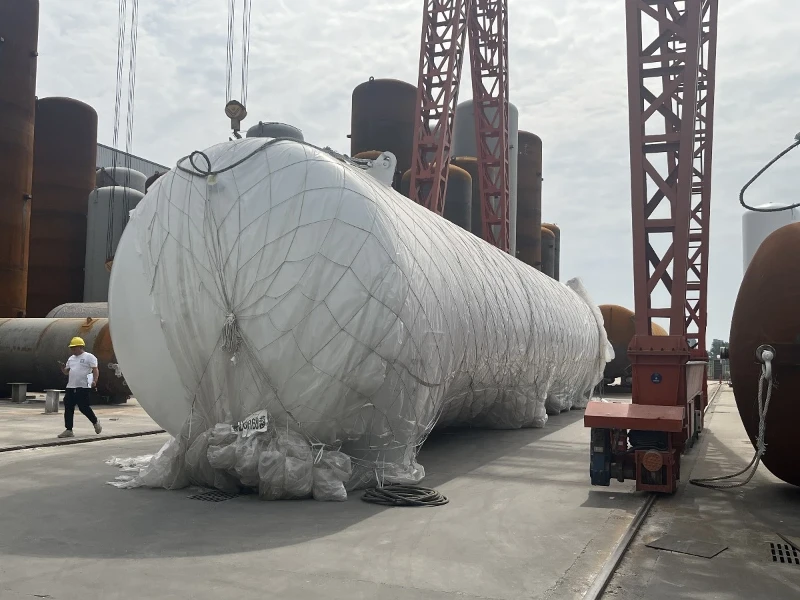
Good packaging protects the quality of our products
1. Ensure the quality of cryogenic liquids
Prevent temperature fluctuations
Cryogenic liquids, such as liquid nitrogen (-196℃) and liquid oxygen (-183℃), are extremely sensitive to temperature changes. Inadequate packaging will cause external heat to invade, causing the temperature of the cryogenic liquid to rise and part of the liquid to vaporize, which will not only cause liquid loss, but also change the composition and purity of the liquid.
Analogy: Just like putting a cup of ice water at room temperature, if the container is not sealed, the ice water will gradually melt and the temperature will rise. If the cryogenic liquid storage tank is not tightly packed, it is like this cup of ice water without a lid, and heat will continue to enter, affecting the quality of the liquid.
Avoid impurities from mixing
Tight packaging can effectively prevent dust, moisture, impurities, etc. in the air from entering the storage tank. Once these impurities are mixed into the cryogenic liquid, they may react chemically with the liquid or affect the performance of the liquid.
For example: In industrial production, if water is mixed into liquid oxygen, ice crystals may form in a low-temperature environment, blocking pipes and valves, and affecting the normal operation of the equipment.
2. Ensure transportation safety
Prevent accidents caused by leakage
Cryogenic liquids are flammable, explosive, toxic and harmful. If the packaging is not tight and leakage occurs, it may cause serious accidents such as fire, explosion, poisoning, etc.
Data description: After liquid oxygen leaks, contact with combustibles may cause violent combustion and explosion; liquid nitrogen leakage will reduce the oxygen content in the surrounding air, causing suffocation.
Withstand vibration and impact during transportation
During export transportation, storage tanks will experience various vibrations and shocks, such as bumps in sea transportation and bumps in land transportation. Tight packaging can enhance the impact resistance of storage tanks and prevent the storage tanks from being damaged by vibration and impact, resulting in liquid leakage.
Analogy explanation: Just like we put a protective case on our mobile phones to prevent the mobile phones from being damaged when they fall or collide. The tight packaging of cryogenic liquid storage tanks is like a protective case for mobile phones, which plays a protective role.
3. Comply with international standards and regulatory requirements
Meet transportation safety standards
Internationally, there are strict safety standards for the packaging of cryogenic liquid storage tanks, requiring that the packaging must be able to ensure the safety of the tanks during transportation. Only if the packaging is very tight can these standards be met and export permits be obtained.
For example: The International Code for the Construction and Equipment of Ships Carrying Liquefied Gases in Bulk (IGC Code) formulated by the International Maritime Organization (IMO) has detailed regulations on the packaging, structure, materials, etc. of cryogenic liquid storage tanks.
Comply with the regulations of the importing country
Different countries may have different regulatory requirements for imported cryogenic liquid storage tanks, including packaging regulations. Exporting companies must ensure that the tank packaging complies with the regulations of the importing country, otherwise the goods may be refused entry.
For example: Some countries require that the packaging of cryogenic liquid storage tanks must undergo specific certification, such as the EU's CE certification. If the packaging is not tight and the certification cannot be obtained, the goods cannot enter the EU market.
4. Protect the environment
Prevent liquid leakage from polluting the environment
After the cryogenic liquid leaks, it may cause pollution to the soil, water sources, air, etc. For example, liquid nitrogen leakage will reduce the oxygen content in the surrounding air and affect the survival of plants and animals; liquid oxygen leakage may cause fires and cause environmental problems such as forest fires.
Reduce greenhouse gas emissions
Some cryogenic liquids, such as liquefied natural gas (LNG), will be converted into gas after leakage and released into the atmosphere, increasing greenhouse gas emissions. Tight packaging can effectively prevent LNG leaks and reduce the impact on climate change.
Data description: According to relevant research, for every ton of LNG leaked, about 1.5 tons of carbon dioxide equivalent greenhouse gas will be released.